


I put out my Valentine’s decor last week, mostly in an attempt to soothe the empty feeling I’ve had since taking down the Christmas decorations.
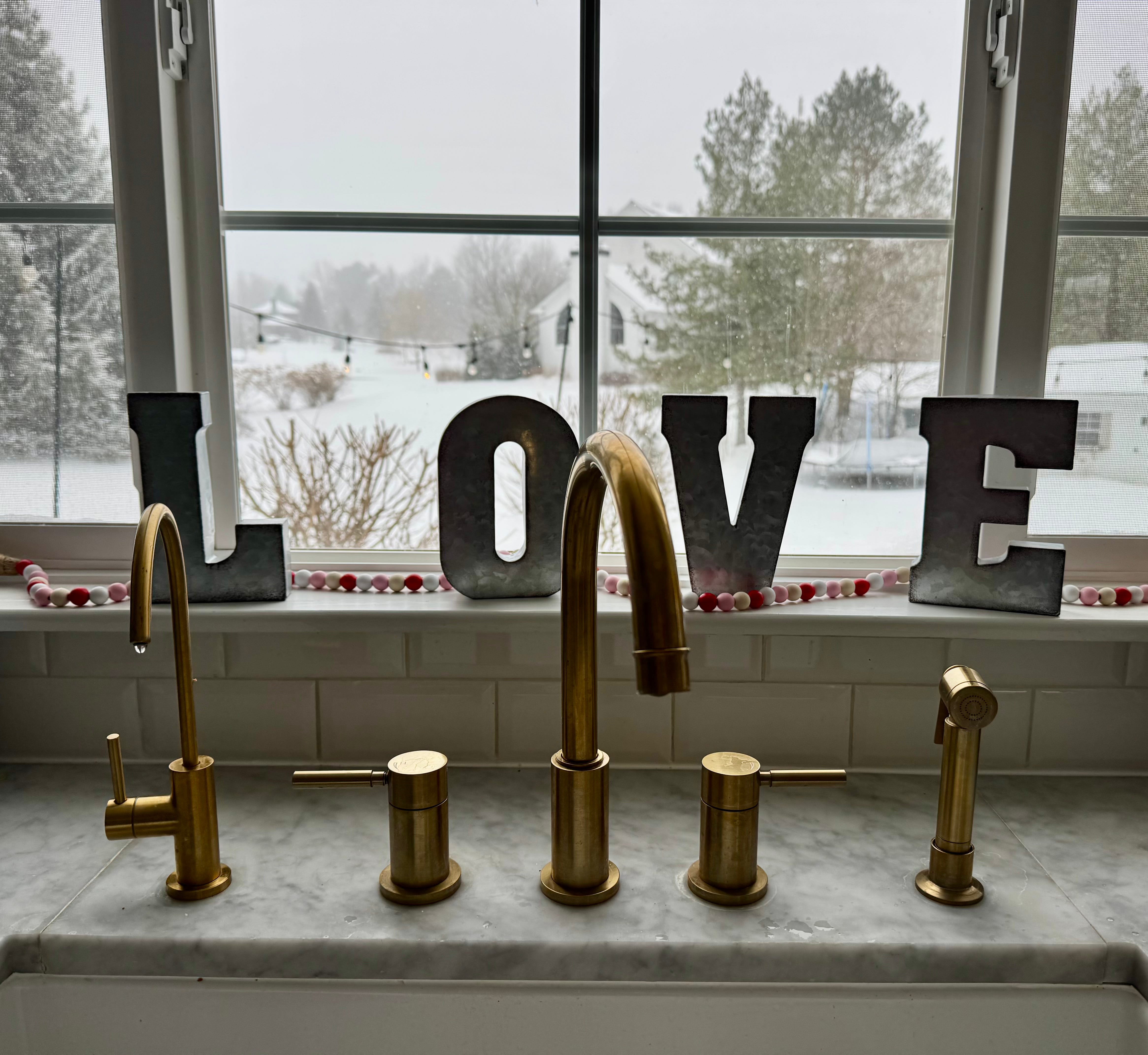
I have two signs that spell out “L-O-V-E,” one that sits in the windowsill at our kitchen sink and another on the dining room buffet.
They’re cute. They’re very Valentine-y.
But as I was balancing the tin letters just right on the kitchen windowsill, I thought to myself, Do I even know what love really means?
I had another thought: Why the hell has it taken me 46 years to ask this question?
I think I can attribute that to perimenopause (more on that later).
But maybe that’s a stretch?
Some say love is a feeling, a heart quality.
Others say, “Love is a verb.”
Conceptually, that makes sense. But I am a word girl. I need definitions.
Some days I just leave questions open and see how God might answer them. I had no desire or instinct to check the dictionary or ask ChatGPT. I wanted to see what definition would find me.
I went on about my week, and during a rather tense and heated moment in an Imago therapy session with my fiancé, our therapist said, “Treat each other like someone you really love.”
That stopped me in my tracks, because I was not, in that moment, treating him like someone I really loved. And I do really love him.
I thought about those four letters on the windowsill, the sign in the dining room, and even the picture that hangs in our foyer.
In my Conscious Leadership work, we talk about leading ourselves first, especially in moments of stress. That session showed me how quickly love can slip when I’m dysregulated, even with someone I deeply care about.
Fortunately, the tense conversation led to healthy dialogue, empathy, and repair in the end. But it still didn’t give me the definition I was looking for.
Later in the week, I started reading a new book by two teachers and friends I admire greatly, Healing Leaders by Raj Sisodia and Nilima Bhat (I HIGHLY recommend it). And right there in the second chapter, “Love Yourself,” was a definition of love that was simple to understand and made sense to me.
Love: the unconditional desire for the well-being of the other.
There was also an extended version that deepened my understanding even more:
Love is the conscious choice to see, value, and serve the essence of another being, holding their well-being, growth, and flourishing as sacred, without seeking to possess, control, or diminish them.
Read those two definitions again. Let the words land.
They made a lot of sense to me, and I will continue to reflect on them.
I’m realizing that love, as they define it, is not just a feeling. It’s a leadership practice. One that begins inside.
The definitions were on page 46, in the chapter about self-love.
So then I began to consider: do I have an unconditional desire for my own well-being?
Lately, love for myself has been feeling quite conditional, depending on any number of factors:
how much I get done in a day
how clean my house is
how good my body looks and feels
how much my ducks are in (or out of) a row
how much sleep I’ve gotten
As Raj and Nilima say in the book:
“Self-love is the courageous act of turning that love inward. True self-love is more than passion, friendship, or commitment; it’s a state of deep compassion and kindness toward oneself. It means engaging in self-care, nurturing your body, mind, and spirit so they remain whole and flourish. It involves honoring your own needs, embracing your imperfections, and treating yourself with the same patience and understanding you would offer to someone you truly cherish, without control.”
That sounds quite unconditional, and unlike what I’ve been feeling.
I think I have some work to do, both on loving myself and loving others.
For me, this question ultimately leads back to my relationship with God. One thing I know for sure is that the ultimate source of love is God. I was not meant to love the way God loves. It’s a standard I can hold, but in my humanness, my version of love will always fall short.
So I stay humble. I practice small acts of kindness and love toward myself and others.
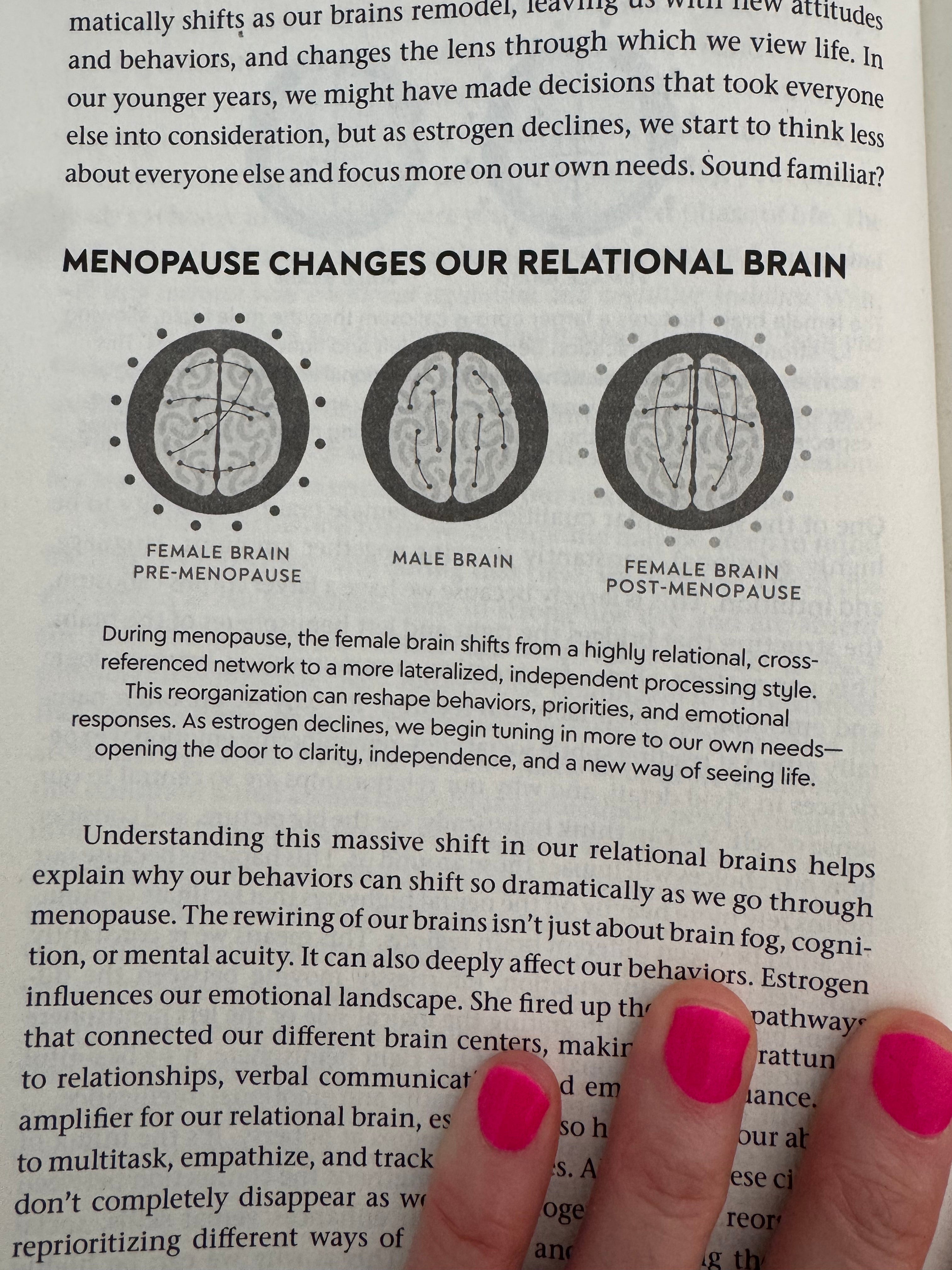
In this perimenopause phase of life, with moodiness, rage, and brain fog, love for myself and others can feel distant and downright hard sometimes.
My brain is changing, from being more relational and people-pleasing to being more independent (aka using one hemisphere of the brain to process, see the image below). I learned this thanks to another seminal book I’m reading, Age Like a Girl by Dr. Mindy Pelz (also HIGHLY recommend).
In this season, self-regulation and self-care feel like the gateway to love, for myself and for others.
I commit to my practices, prayer, journaling, breathwork, stretching, and return to them again and again.
Love is hard.
Our best attempt at love as humans is imperfect.
In this season of perimenopause, I’m realizing that love feels less performative and more like an ongoing practice.
In a few weeks, the roses and romance of Valentine’s Day will be over, but I will continue to contemplate this question:
What would it look like to lead myself with love?
Referenced in this essay:
– Healing Leaders by Raj Sisodia & Nilima Bhat
– Age Like a Girl by Dr. Mindy Pelz